Best Yarn Ball Winders
By FiberCroft . 8 min read . Updated August 2026
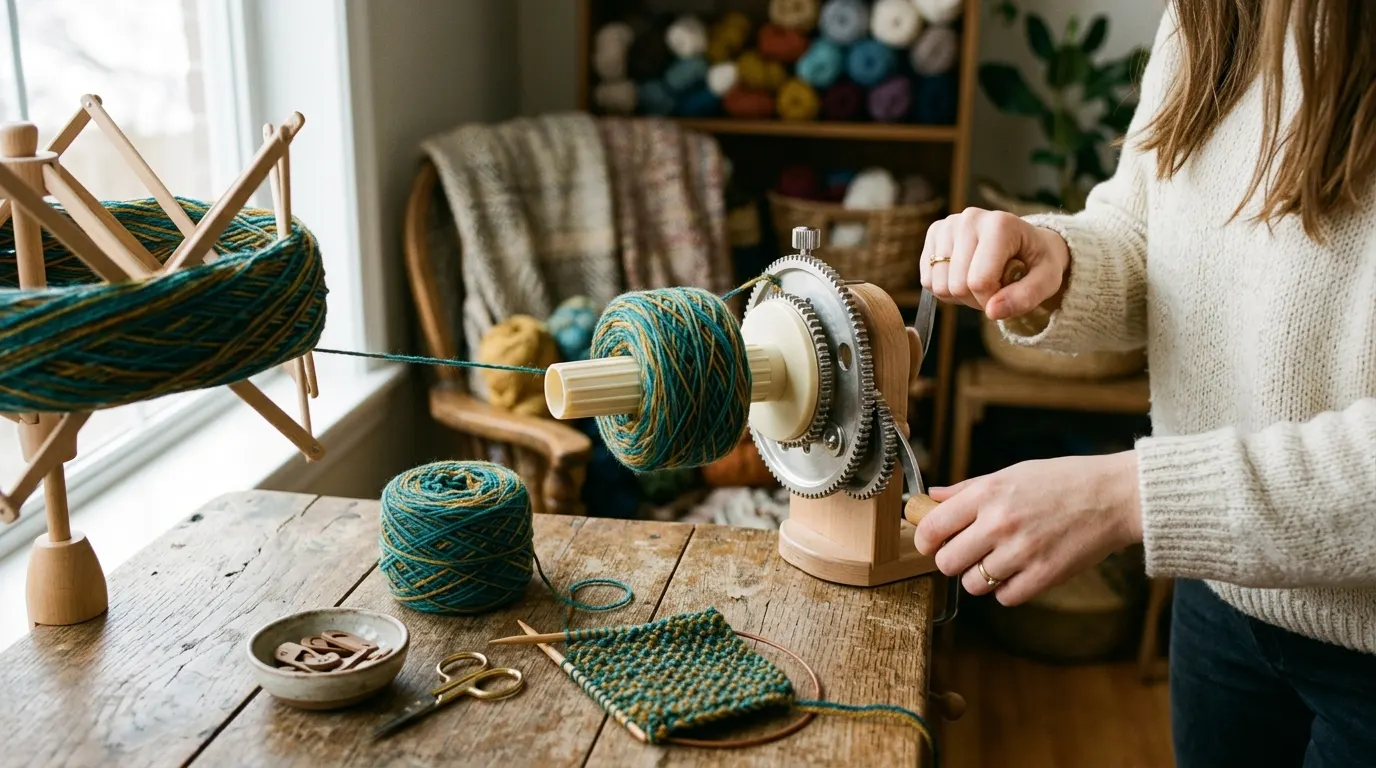
A ball winder turns a loose, tangle-prone skein into a dense, center-pull cake in a couple of minutes of cranking. That cake feeds cleanly from the middle while you knit or crochet, instead of unrolling from the outside and knotting itself around your work. Not every winder is worth owning long-term, though. Capacity, gearing material, and how smoothly the mechanism handles different yarn weights separate a tool that lasts years from one that strips its gears after a season of steady use. This guide compares the Stanwood Needlecraft Large Metal Ball Winder (10 oz) against the budget-friendly Knit Picks Yarn Ball Winder (100g Capacity) , explains what actually matters when you shop, and covers what to pair a winder with once your cake is ready to use.
Quick answer
The Stanwood Needlecraft Large Metal Ball Winder is the best yarn ball winder for most knitters and crocheters. Its 10-ounce capacity and all-metal gearing handle large skeins and daily use without stripping, producing a tight center-pull cake every time. For a tighter budget, the Knit Picks Yarn Ball Winder is a compact, affordable plastic winder handling lace to bulky weight.
This guide contains affiliate links. FiberCroft may earn a commission at no cost to you.
Why a ball winder earns a place on your shelf
Yarn sold as a skein, rather than a pull-skein or a pre-wound ball, is really a large loose loop tied at a few points to keep it from collapsing into a snarl. Knitting or crocheting directly from a skein without winding it first almost always ends in tangles, because the loop has nothing holding its shape once you start pulling yarn from it.
A ball winder solves this by wrapping the yarn around a center spindle in a cross-wound pattern as you turn a crank. The result is a firm, stable cake that stands on its own and feeds from a point in the center rather than unrolling from the outside, which is the part that tangles. Winding a typical 100 gram skein takes two to three minutes once you get the tension right.
The Stanwood Needlecraft Large Metal Ball Winder (10 oz) and the Knit Picks Yarn Ball Winder (100g Capacity) both do this job, but they are built for different volumes of use. Knowing which one matches how often you buy and wind skeins will save you from either overpaying or replacing a winder that wears out too soon.

Stanwood Needlecraft Large Metal Ball Winder (10 oz)
Heavy-duty metal ball winder with a 10-ounce capacity and a smooth gearing mechanism. The most popular standalone winder for crafters who regularly wind large skeins.

Knit Picks Yarn Ball Winder (100g Capacity)
A compact, affordable plastic ball winder that works with all yarn weights from lace to bulky and is compatible with most table clamps. A good entry-level option for new winding setups.
Metal versus plastic gearing: what actually determines longevity
The gearing inside a ball winder is the part that takes the most wear, because every crank turn puts torque through the same set of teeth. Metal gears distribute that load without deforming, which is why a well-built metal winder can wind thousands of skeins over a decade without the mechanism loosening or slipping.
Plastic gearing works fine for occasional use, but the teeth wear down gradually with heavy, repeated cranking, especially on tightly wound skeins or firmer yarns that resist the mechanism more. You will notice this first as a slight looseness in the crank or an inconsistent cake tension, not as a sudden failure.
The Stanwood Needlecraft Large Metal Ball Winder (10 oz) uses metal gearing throughout and is rated for up to 10 ounces per wind, which covers all but the largest specialty skeins. The Knit Picks Yarn Ball Winder (100g Capacity) uses plastic gearing and a smaller capacity, which is a reasonable trade-off for a lower price if you are only winding a skein or two a week.
Stanwood Needlecraft Large Metal Ball Winder (10 oz)
Heavy-duty metal ball winder with a 10-ounce capacity and a smooth gearing mechanism. The most popular standalone winder for crafters who regularly wind large skeins.
Knit Picks Yarn Ball Winder (100g Capacity)
A compact, affordable plastic ball winder that works with all yarn weights from lace to bulky and is compatible with most table clamps. A good entry-level option for new winding setups.
Stanwood Large Metal Ball Winder: the best all-around pick
The Stanwood Needlecraft Large Metal Ball Winder (10 oz) is the winder most fiber crafters settle on once they wind more than the occasional skein. The 10-ounce capacity means most skeins, including many hand-dyed 8 to 9 ounce sweater quantities, wind in a single pass instead of needing to be split and wound twice.
The metal gearing produces a smooth, consistent crank with no grinding or catching, and the resulting cake holds its shape well even after being tossed in a project bag. Because the winder is heavier and more solidly built than plastic alternatives, it needs a secure clamp position on the table, since the torque from cranking a full 10-ounce skein is noticeably higher than a small plastic winder generates.
The price is higher than a basic plastic winder, but for anyone who winds yarn weekly, the durability difference pays for itself. A metal winder that lasts a decade is a better long-term value than replacing a plastic one every couple of years.
Stanwood Needlecraft Large Metal Ball Winder (10 oz)
Heavy-duty metal ball winder with a 10-ounce capacity and a smooth gearing mechanism. The most popular standalone winder for crafters who regularly wind large skeins.
Knit Picks Yarn Ball Winder: the budget starting point
The Knit Picks Yarn Ball Winder (100g Capacity) is the right choice for someone setting up their first winding station without committing to a premium tool right away. It handles yarn weights from lace to bulky, has a compact footprint that stores easily in a drawer, and clamps to most standard table edges.
The plastic gearing is the main limitation. It winds smoothly for occasional use, but the gear teeth will show wear over years of heavy, frequent winding. For a knitter or crocheter who winds a skein or two a week rather than daily, this is a non-issue, and the lower price makes it an easy way to try the swift-and-winder workflow before upgrading.
If you find yourself winding several skeins a week and start noticing the crank feels less precise than it used to, that is the signal to move up to the Stanwood Needlecraft Large Metal Ball Winder (10 oz) rather than replacing this one with another plastic model.
Knit Picks Yarn Ball Winder (100g Capacity)
A compact, affordable plastic ball winder that works with all yarn weights from lace to bulky and is compatible with most table clamps. A good entry-level option for new winding setups.
Stanwood Needlecraft Large Metal Ball Winder (10 oz)
Heavy-duty metal ball winder with a 10-ounce capacity and a smooth gearing mechanism. The most popular standalone winder for crafters who regularly wind large skeins.
Pairing your winder with a swift
A ball winder works best paired with a swift, which holds the skein open and rotating so the winder can draw yarn off it under even tension. Without a swift, you are left draping the skein over a chair back or your own arms, which slows winding down and increases the chance of a tangle mid-wind.
The Stanwood Needlecraft Wooden Umbrella Swift (Medium) is the natural pairing for either winder in this guide. Its smooth birch arms will not snag delicate or hand-dyed yarn, and the C-clamp base keeps it stable on the same table as your winder. Position the two tools 60 to 90 centimeters apart so the yarn travels at a gentle, even tension between them.
If you already own a swift from another brand, either winder in this guide will work with it. The swift and winder are independent tools connected only by the yarn passing between them, not by any physical attachment.

Stanwood Needlecraft Wooden Umbrella Swift (Medium)
Smooth birch wood umbrella swift with a table-clamp base that holds skeins up to a large size. Winds without snagging and adjusts for different skein circumferences.
What to do with your finished cake
Once your cake is wound, tuck the tail end loosely into the center pull point so it does not unwind on its own, then slide it off the spindle. A center-pull cake can go straight into a project bag, but many knitters prefer to set it in a yarn bowl while working at home.
The Handmade Ceramic Yarn Bowl with Spiral Slot keeps a cake from rolling off a table or across the floor while feeding yarn through a spiral slot at a light, consistent tension. The heavy ceramic base stays put even when yarn pulls at an angle, which a lightweight cake sitting loose on a table cannot do on its own.
For cakes headed straight into a project bag rather than staying at home, no additional tool is needed. The cross-wound structure from the winder is stable enough to survive being carried around without collapsing or tangling.
Handmade Ceramic Yarn Bowl with Spiral Slot
A hand-thrown ceramic bowl with a curved spiral slot that feeds yarn smoothly while keeping a ball from rolling away. A functional and aesthetic addition to any knitting setup.
Featured in this guide
Stanwood Needlecraft Large Metal Ball Winder (10 oz)
Heavy-duty metal ball winder with a 10-ounce capacity and a smooth gearing mechanism. The most popular standalone winder for crafters who regularly wind large skeins.
Knit Picks Yarn Ball Winder (100g Capacity)
A compact, affordable plastic ball winder that works with all yarn weights from lace to bulky and is compatible with most table clamps. A good entry-level option for new winding setups.
Stanwood Needlecraft Wooden Umbrella Swift (Medium)
Smooth birch wood umbrella swift with a table-clamp base that holds skeins up to a large size. Winds without snagging and adjusts for different skein circumferences.
Handmade Ceramic Yarn Bowl with Spiral Slot
A hand-thrown ceramic bowl with a curved spiral slot that feeds yarn smoothly while keeping a ball from rolling away. A functional and aesthetic addition to any knitting setup.
Keep reading
Related comparisons
Related roundups
FAQ
Frequently asked questions
How much yarn can a ball winder handle in one wind?+
It depends on the winder. The Stanwood Large Metal Ball Winder handles up to 10 ounces in a single wind, which covers most skeins including many sweater-quantity hanks. The Knit Picks Yarn Ball Winder has a smaller capacity closer to 100 grams, so larger skeins may need to be split and wound in two passes on that model.
Do I need a swift to use a ball winder?+
You do not strictly need one, but winding without a swift is significantly slower and more prone to tangling. Without a swift, the skein has to be draped over a chair back or held by another person, and it cannot rotate freely to feed the winder at an even tension. A swift like the Stanwood Wooden Umbrella Swift solves this and pays for itself in time saved on the first large skein.
Is a metal or plastic ball winder better?+
Metal gearing lasts longer under frequent, heavy use and holds tension more consistently over years of cranking. Plastic gearing is a reasonable choice for occasional winding and costs less upfront, but the teeth wear down gradually with heavy repeated use. Someone winding a skein a week or less will get years of good service from a plastic winder like the Knit Picks model. Someone winding several skeins a week should choose metal from the start.